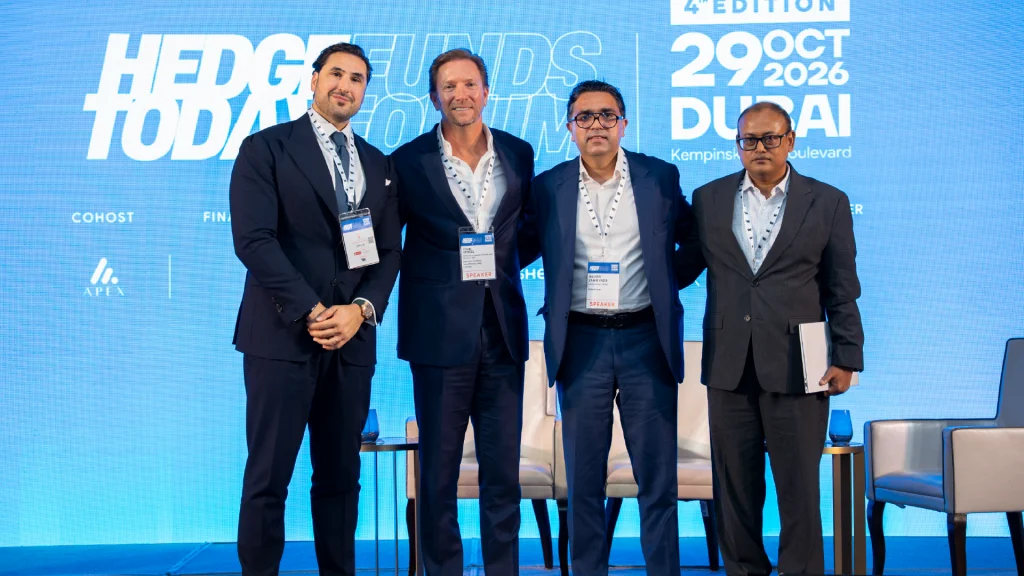
Liquidity was one of the defining themes of the fourth Hedge Funds Today Forum, held in Dubai
on October 29. Demeter Tactical Investments (ME) Ltd. participated in a panel discussion and
hosted an afternoon roundtable focused on the evolving priorities of investors and allocators.
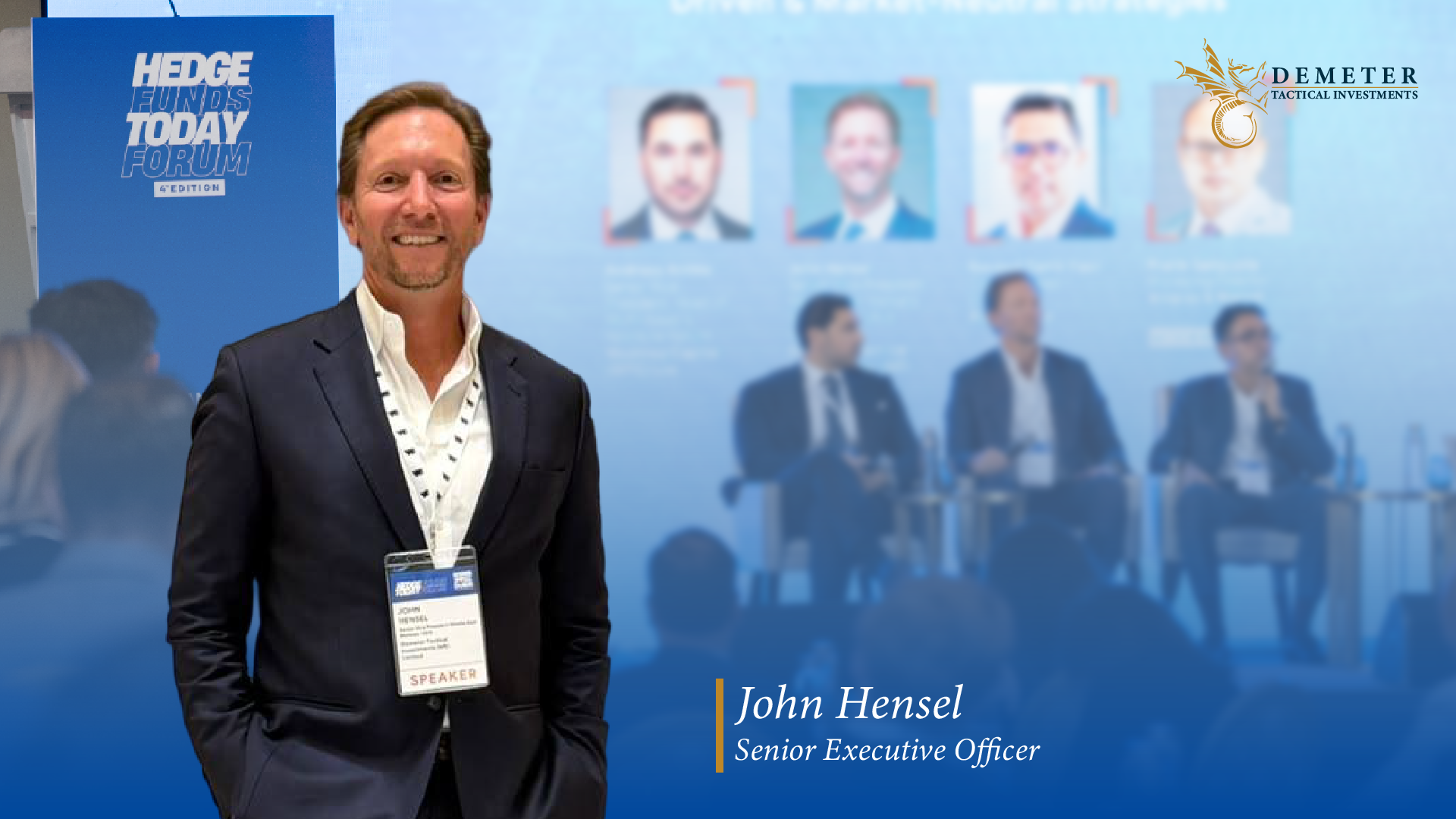
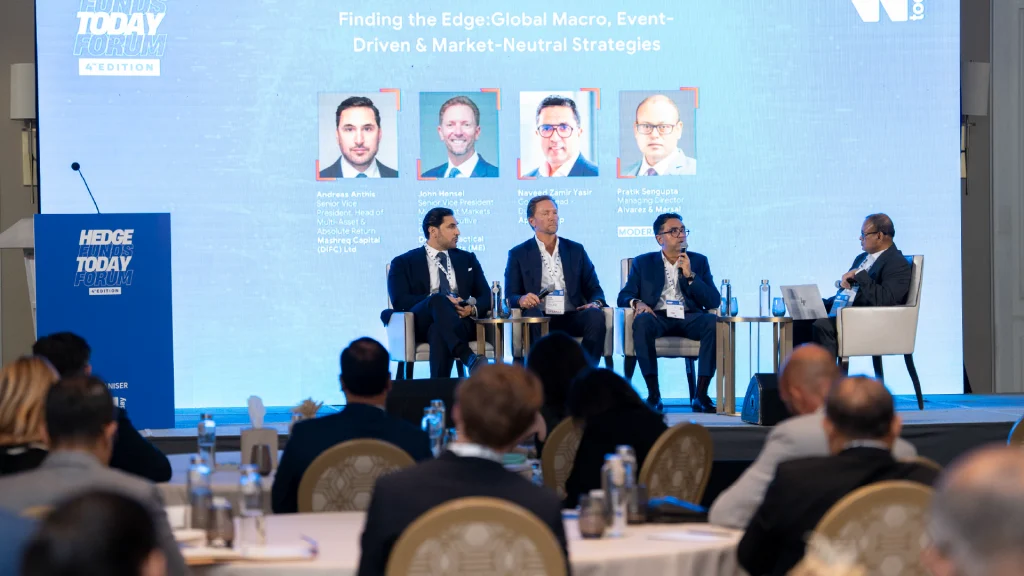
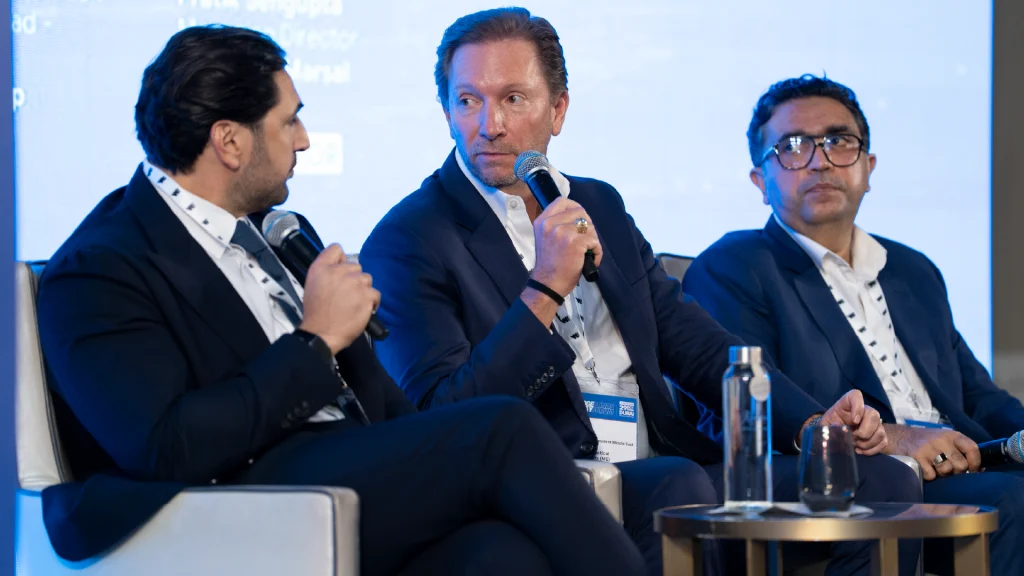
John Hensel, Senior Vice President, Middle East Markets, represented Demeter on the panel,
“Finding the Edge: Global Macro, Event-Driven & Market-Neutral Strategies.” The discussion was
moderated by Pratik Sengupta of Alvarez & Marsal and also featured Andreas Anthis of Mashreq
Capital (DIFC) Ltd. and Naveed Zamir Yasir of Apex Group.
What Allocators Are Asking For
The panel centered on a fundamental question: What do allocators expect from their capital
today?
While investors continue to seek attractive returns, many are placing greater emphasis on
income and, increasingly, on the ability to access capital when needed. In John’s view, the
common thread connecting these objectives is optionality — the choices an investor retains as
markets, circumstances and priorities change.
These objectives do not always coexist easily within a single investment. Assets offering greater
long-term growth potential, such as private holdings and operating businesses, may require
capital to remain committed for years. Public markets, by contrast, generally provide greater
liquidity and a clearer path to exit. The challenge, therefore, is not necessarily to find a single
investment that delivers everything, but to strike the appropriate balance across the broader
portfolio.
Concentration in Family Office Portfolios
Finding that balance can be particularly challenging for family offices in the region, where
significant portions of wealth may be concentrated in real estate and operating businesses.
Many families recognize the concentration within their portfolios while simultaneously managing
the cash-flow requirements of their businesses and other obligations. Converting substantial
private assets into liquidity is rarely straightforward. Selling quickly may require accepting a
significant discount to an asset’s perceived value — assuming a willing buyer can be found at all.
Reducing this concentration can therefore take years, particularly when private holdings are
subject to long lock-up periods. At the same time, operating businesses must continue to meet
payroll, fund expansion and satisfy ongoing capital requirements. Borrowing against existing
assets can provide additional flexibility during this transition, but the cost of financing must be
weighed against expected investment returns. Liquidity, in other words, has a cost — but so does
the lack of it.
Geography, Currency and Asset Exposure
The discussion then turned to another important question: Where should capital be deployed
once it becomes available?
John framed the decision around three considerations: geography, currency and asset
exposure. Together, these factors determine not only where an investor seeks returns, but also
the risks and choices embedded within the portfolio.
U.S. equities remain central to many portfolios, but there is an important distinction between
owning a concentrated group of individual stocks or sectors and maintaining broader index
exposure. Europe and Asia can provide useful diversification around that U.S. core, depending
on an investor’s existing holdings and objectives.
John also expects the U.S. dollar to remain the principal currency exposure in many portfolios
over the next five years. As a result, currency risk becomes an important consideration when
allocating capital to other markets. Beyond traditional equity exposure, he identified infrastructure
— including energy, logistics and data centers — as an area likely to continue attracting investor
interest.
Beyond the Crowded Trade
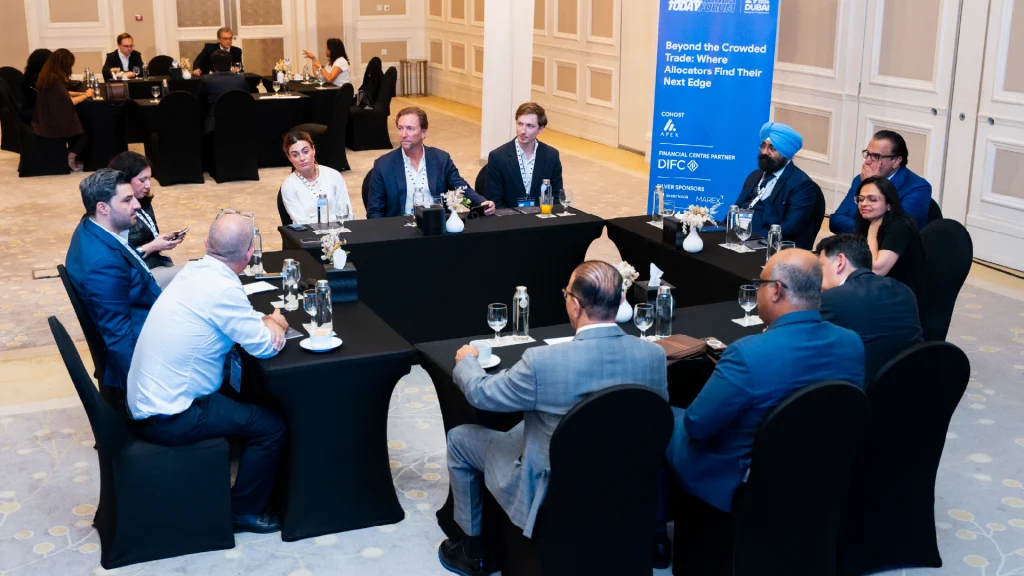
In the afternoon, John hosted the roundtable, “Beyond the Crowded Trade: Where Allocators
Find Their Next Edge,” conducted under the Chatham House Rule
The discussion examined where investors may find sources of return beyond increasingly
crowded consensus positions. Participants explored niche liquid alternatives and systematic
strategies, the importance of downside discipline when crowded trades unwind, and the role of
institutional governance across regional markets.
The conversation reinforced a broader theme from the day: finding an investment edge is not
simply about identifying the next source of return. It is also about understanding concentration,
preserving flexibility and maintaining the ability to respond when market conditions change.
Preparing for Corrections
Both sessions reflected a shared concern that investors must remain prepared for a meaningful
market correction even as they continue searching for attractive returns.
Energy prices, interest rates, geopolitical developments and shifts in investor sentiment can all
place pressure on markets, even as major indices reach new highs. In this environment, portfolio
construction cannot focus exclusively on upside participation. It must also consider how capital
will behave when conditions deteriorate.
For John, preparing for corrections belongs in the same conversation as seeking returns. Every
dollar preserved in a falling market is a dollar that does not have to be earned back.
That principle brings the discussion back to where it began: liquidity and optionality. Returns
matter, but so does an investor’s ability to preserve capital, access it when needed and redeploy
it when opportunities emerge.
Demeter thanks The Wealth Today, its fellow panelists and the roundtable participants for an
engaging and thoughtful discussion.