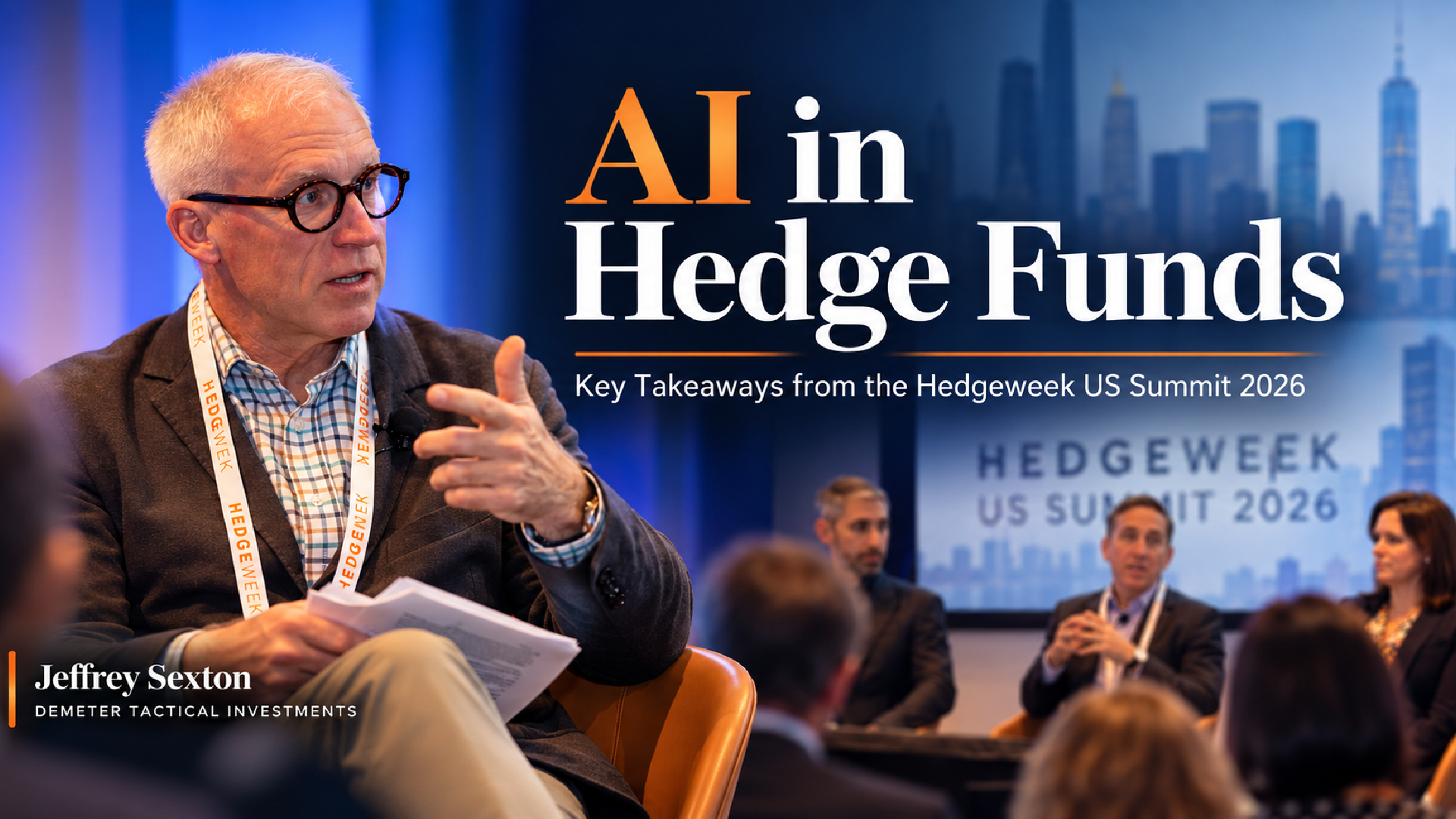
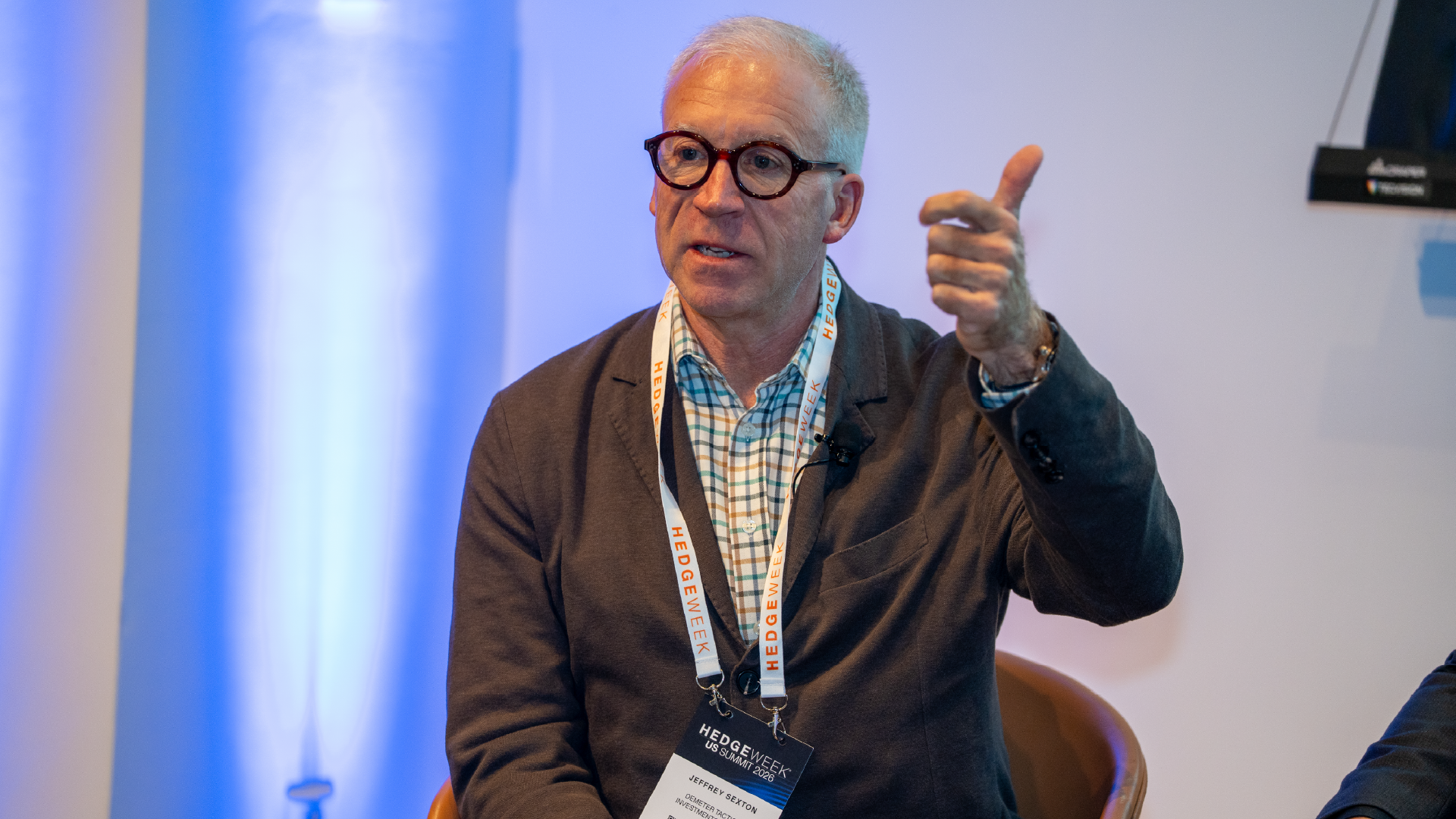
How should investment firms use the time and resources AI frees up, and who ultimately benefits from those gains? That question formed a central part of the discussion moderated by Jeffrey Sexton, Founder and Chief Investment Officer of Demeter Tactical Investments Middle East, at the Hedgeweek US Summit in New York on October 8, 2026.
Joining Jeffrey Sexton on the panel were Jen Albert of GreenWulf Asset Management, Yarin Kirchen of Beacon Harbor Capital and Dean Schaffer of Lightkeeper. The panel discussed the practical decisions facing hedge fund managers and institutional allocators as they integrate AI into their businesses, from choosing appropriate tools and checking their outputs to training future leaders and maintaining investor confidence.
Integrating AI into hedge fund workflows
Choosing an AI tool requires a clear understanding of the work it will support, how it fits into existing processes and who will review what it produces. An answer delivered quickly still needs to be checked for accuracy, relevance and the assumptions behind it before it informs a decision.
The discussion addressed the importance of critically evaluating AI-generated information and ensuring that teams understand it well enough to use it appropriately. Access to more information can help a business, provided the people working with it can distinguish useful analysis from incomplete or misleading conclusions.
Human oversight therefore needs to involve people with the experience and authority to challenge an output. Clear responsibility for review and approval, supported by appropriate compliance controls, gives firms a basis for using these tools with greater confidence. It also helps managers explain their approach to investors and allocators, who need to understand where AI is being used and who remains accountable for the work.

Preparing the next generation of investment leaders
As AI takes on more tasks, firms also need to consider how their people will develop the experience required to supervise it.
Recognizing an error depends on understanding the underlying work. Assessing an AI-generated recommendation requires familiarity with its assumptions, its limitations and the potential consequences of acting on it. Future leaders will need opportunities to develop that knowledge alongside their ability to use the technology.
Training should therefore include reviewing outputs with experienced colleagues, questioning conclusions and understanding when further investigation is necessary. The goal is to build teams that can work efficiently with AI while retaining the confidence and professional judgment to challenge it.
For managers, this creates a responsibility to consider how changing workflows affect learning and career development. The people who will eventually lead investment businesses need to understand how decisions are reached and be prepared to take responsibility for them.
Who captures the financial benefits of AI?
An equally important part of the conversation concerned where the financial advantage from greater productivity ultimately goes.
A manager able to accomplish more with a leaner team has choices about how to use the resources that become available. Savings could fund additional research, better technology or more competitive compensation to attract and retain talented people. Time saved on routine tasks could allow experienced professionals to devote greater attention to analysis, review and other work that benefits from their judgment.
Those choices will influence whether efficiency gains lead to lasting improvements in the business. Firms need to consider which investments will strengthen their processes and teams, and how to assess the quality of the work being produced as capacity increases.
For Jeffrey Sexton, the opportunity lies in reinvesting thoughtfully while maintaining the standards investors expect. AI can help an investment firm accomplish more, but the people running the business remain accountable for its governance, its compliance obligations and the trust placed in it.
Demeter thanks Jen Albert, Yarin Kirchen and Dean Schaffer for sharing their perspectives, and Manas Singh and the Hedgeweek team for bringing the discussion together.